Trevor Dickinson (Executive Producer)

Trevor is originally from England and has had a long and successful business career, living and working all over the word. More recently as a Business Angel he invested in a diverse range of companies covering many industries. Most have a certain “geek” factor and include, among others, semantic search engine technology, unique QR code application and tracking, data trend and demand analytics, video editing and collaboration software, holographic virtual reality technology and smart sensor textiles. However, his hobby and passion is the Amiga computer. He is a long time Amiga enthusiast, collector and co-founder of A-EON Technology and has worked hard to keep the Amiga dream alive. Although he has a particular fondness for the Classic AmigaOS and AmigaOS 4 he is also interested in all Amiga-inspired flavours, including MorphOS, AROS and Amiga emulation. In recent years he has even begun exploring the wonders of Linux, especially when installed on one of his Next-Generation PowerPC “Amigas”. He lives in Wellington, New Zealand with his wife and Commodore and Amiga computer collection.
http://www.linkedin.com/pub/trevor-dickinson/4/547/357
Bill Borsari (Producer)

Bill was first introduced to the Amiga Computer via an Amiga 500 given as a birthday present. Loving the technology he grew that system to include a hard disk and extra ram. In 1992 he was able to purchase an Amiga 1200 and his life long passion for the platform was born. By 1991 he was a member of the local Amiga user group (NCAUG). By 1995 he was the chairman of NCAUG. Also in 1995 started to attend Amiga conventions an shows. Seeing a growing online community of Amiga users he starting to broadcast the shows to the internet in 1996. First with just text IRC, to audio streaming, to live Video streaming. All the while, ensure the content is accessible from Amiga Computers. That effort transformed into an ongoing regular broadcast from the AmiWest show, including a Amiga 2000 with Video Toaster powered live video feed. When not tinkering with an Amiga systems Bill spend time with his wife and sons.
Luca Severini (Organizing Committee):

Luca (Severini) is a software engineer from Italy who came in California
in 2008 to get a CS degree. He has worked many years in desktop-publishing industry in Italy and Germany developing software for some of the largest editorial companies down there. Coming from a country with plenty of it, he always liked history and discovered his passion for retro-computing when he bought here his first Amiga ever on eBay in 2009.
Since then he now own also a super-expanded Amiga 1200 and an original Amiga 1000 other than some thirty more consoles, home and personal computers from the 80′ and early 90′. During his studies he has worked at Apple, RTI and Cisco.
He is also involved as a volunteer at the Computer History Museum in Mountain View..
Dale Luck (Organizing Committee)

Dale Luck is an engineer known for his technical contributions to Amiga Corporation during a pivotal time in its history. He was involved in the development team responsible for creating the Amiga computer’s hardware and software architecture. His engineering work contributed to key features that defined the platform, including its advanced graphics capabilities (such as the iconic “Boing Ball” demo he co-created) and the preemptive multitasking provided by the AmigaOS, which were significant innovations in the personal computer market at that time.
Following his tenure at Amiga, Dale Luck transitioned to The 3DO Company, applying his engineering skills to the development of the 3DO Interactive Multiplayer console, which aimed to leverage CD-ROM technology. Later in his career, he joined Roku, Inc., the company known for its streaming devices and platform. As documented in 2017, Luck served as a Senior Software Architect at Roku, demonstrating his continued involvement in developing software systems for consumer technology platforms. This career path highlights his contributions to engineering across influential companies in the computing, gaming, and digital media sectors.
Evangelos Goulas (Organizing Committee)

Originally from New York, raised in Europe, and returning to the US to pursue his dream, he embodies a unique blend of global influences and technical mastery. Born from the spark of the Amiga’s revolutionary spirit, his career has been a journey fueled by insatiable curiosity and a passion for digital innovation. The early days of the Amiga didn’t just introduce him to computing—they ignited a relentless drive to explore every facet of the digital realm. That passion was so powerful that his very first job application, a heartfelt tribute to this iconic platform, set the stage for a thriving career.
His path eventually led him from the creative energy of the movie industry to the dynamic environment of the San Francisco Bay Area, where he embraced roles as a technical program manager and engineering project manager. Leading global teams through complex, time-sensitive projects became not just a role, but a calling—one that blends technical expertise with strategic vision.
Now, as the 40th anniversary of the Amiga Commodore is celebrated at VCF West, he stands as a testament to the power of inspiration and innovation.
Alan Smithenbank (Organizing Committee)
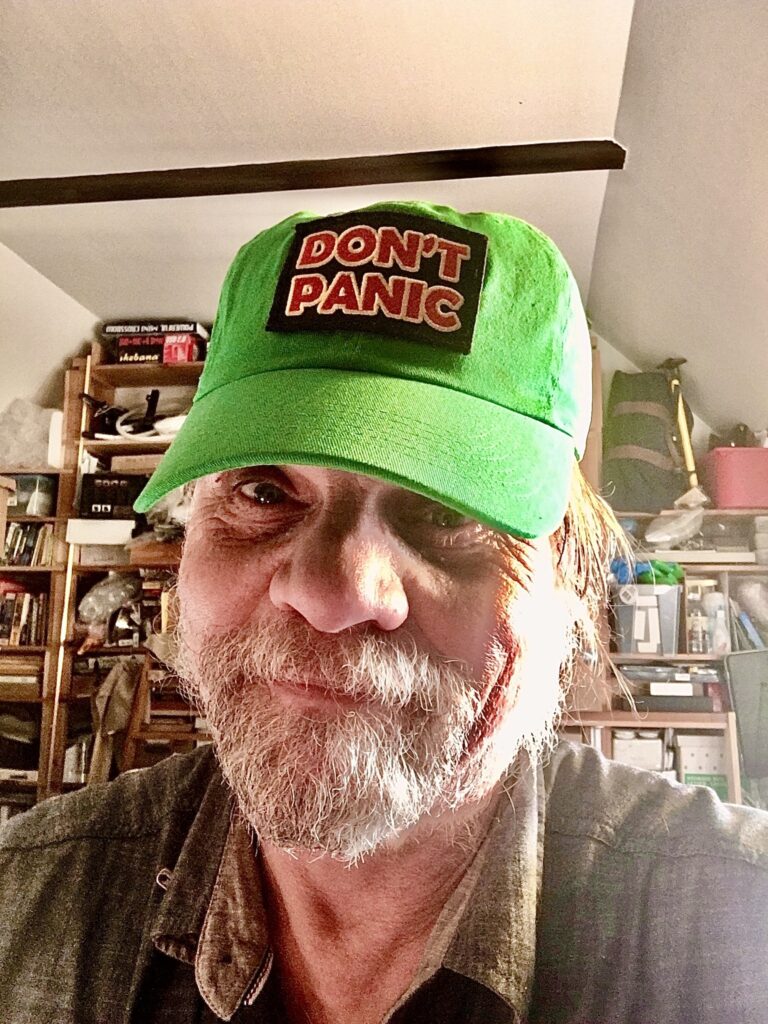
Alan grew up a couple of miles outside of a town of 450 residents in rural northern California. While he spent most of his formative years playing more with the readily available rocks and sticks, he caught the electronics bug early on due to the presence of a gigantic Philco multi-band family room radio with many delightful knobs, dials, and switches; never quite getting it to work, but making
some satisfying noises. Alan first encountered the Amiga back when taking AI classes as San Jose State University and a fellow student brought in a shiny new A1000 to show off. As far as computers go, Alan never looked back. Amiga was the one. Alan worked at the Stanford Linear Accelerator Center in the days when it was an active Amiga developer site and amongst other Amiga things did the layout of a Zorro card used in A4000 towers that collected data from the main linear accelerator detectors. He also used his A2000 coding and texting out a Master’s Thesis in Marine Science describing the analysis of environmental data from
San Francisco Bay in the time, frequency, and variance domains. He also, with their permission, modified the interface to the Absoft FORTRAN compiler and wrote a book that covered using most of the 2.0 RKM features directly from FORTRAN on the Amiga and how to run AREXX scripts from FORTRAN. It’s probably findable out on the inter-tubes somewhere.
Chris Collins (Chief Builder)
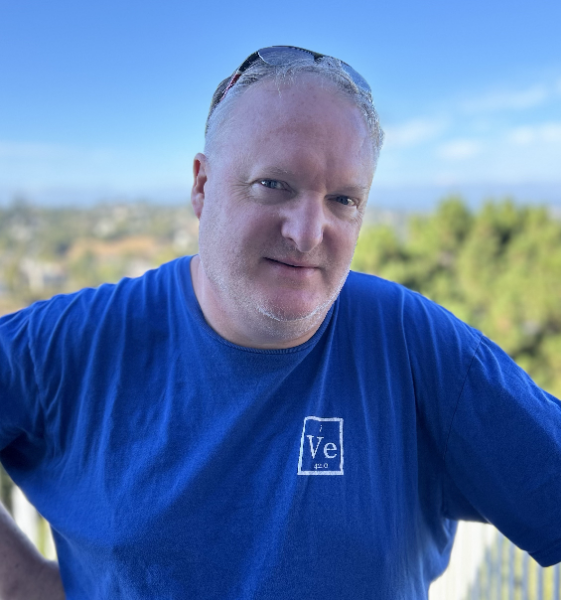
Chris hails from Stoke-on-Trent, UK, and currently lives in Northern California. With a Computer science degree, Chris has become a prolific collector of vintage computers and modern tools. If you see something that was 3D printed, laser cut, sawed, painted, or glued at the AMIGA/040th, Chris did it.
Paul Sadlik (Chief Architect)

Over the last three decades, Paul has owned almost every model of Amiga, from an inaugural A1000 to the newest Amiga models debuting in 2015. Throughout this time, Paul has been devoted to the power, pleasure, and magic of using Amigas—what other computers pretend to deliver. Over the years, he has been a correspondent and editor of an Amiga newsletter, covered Amiga shows, helped run user groups and programming classes, and served as an OS beta tester and a hobbyist programmer. To this day, Paul uses Amigas every day for both play and work as an architect in the Mid-Atlantic region.
Kermit Woodall (Lead Web Master)

Kermit (a Virginia native) entered the Amiga Scene as a developer and the public face for Nova Design and their award-winning image editing software, ImageFX. Riding the wave of the home video revolution ImageFX became an incredibly successful special effects and image editing solution for video and has earned a place as of the must-have Amiga software packages of it’s day. Along with ImageFX, Nova Design launched an all-new Aladdin 4D rendering package, Millennium for the Video Toaster and Cinematte, a plugin for blue screen compositing in Photoshop on Windows.